Why the Savings Rate Increases Between December and February: Hypothesis Explained
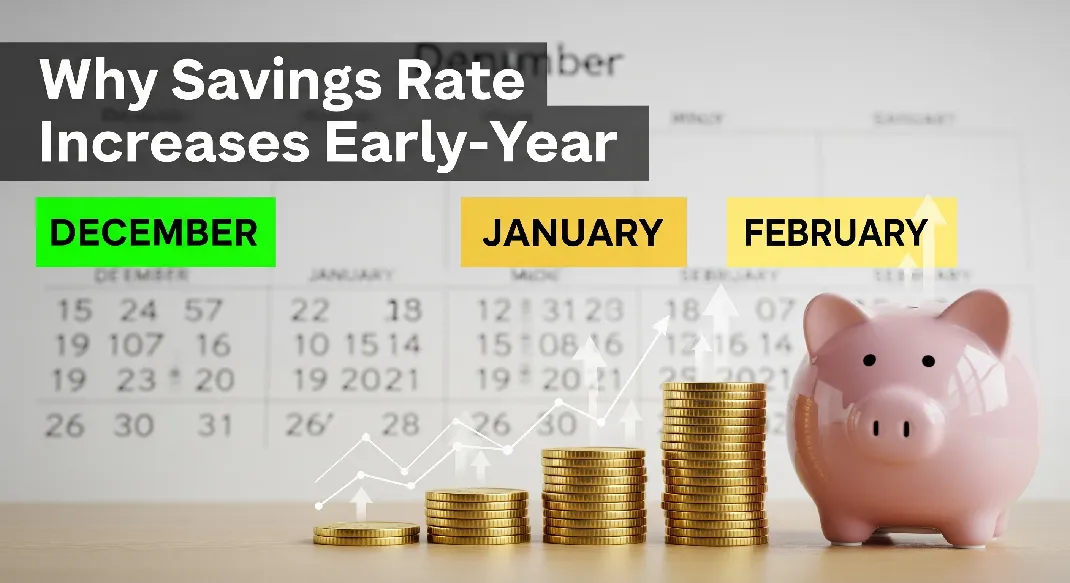
One of the most intriguing trends in household financial behavior is that the savings rate increased every year at some point between December and February. Hypothesize why this might be. Observing this pattern across multiple years raises questions about the underlying causes. Is it driven by seasonal habits, economic factors, or behavioral patterns? In this comprehensive guide, we will explore all possible explanations, backed by data, examples, and expert insights.
Understanding the Savings Rate
The savings rate is a metric that shows the percentage of disposable income that households or individuals save instead of spending. It is a key indicator of financial health and economic trends. When analyzing historical data, we notice that the savings rate increased every year at some point between December and February. Hypothesize why this might be is a question that requires examining a combination of seasonal, behavioral, economic, and institutional factors.
Seasonal Factors Influencing Savings
Seasonality plays a significant role in household finances. December is often a month of high expenditure due to holidays, gifts, travel, and festivities. Once January begins, households typically adjust their spending, leading to an increase in the savings rate. Several seasonal factors contribute to this trend:
- Post-Holiday Budget Recovery: Many households spend heavily in December and then focus on saving in January and February to recover financially.
- New Year Financial Goals: The start of a new year often prompts individuals to set resolutions to save more, pay down debt, or invest wisely.
- Year-End Bonuses: Employees often receive bonuses in December, some of which are saved in the early months of the new year.
- Tax Considerations: Some households make tax-advantaged contributions or financial adjustments early in the year, temporarily boosting savings.
Economic Hypotheses Behind the Trend
Economic factors are essential to understanding why the savings rate increased every year at some point between December and February. Hypothesize why this might be. Below are some key economic explanations:
- Income Cycles: Wage adjustments, bonuses, or early-year investment returns can provide extra disposable income that is often directed to savings.
- Seasonal Spending Patterns: After high spending in December, consumers naturally reduce expenses in January and February, contributing to higher savings rates.
- Precautionary Savings: Economic uncertainty or anticipated expenses may lead households to increase their savings at the start of the year.
- Interest Rate Effects: Changes in interest rates around year-end or early in the year may incentivize short-term savings in bank accounts or fixed deposits.
Behavioral and Psychological Factors
Behavioral science provides additional insights into why the savings rate increased every year at some point between December and February. Hypothesize why this might be. Human financial decisions are influenced not only by income but also by psychology and habits:
- New Year’s Resolutions: Individuals often resolve to save more or spend less, directly impacting early-year savings rates.
- Financial Awareness: After heavy December spending, individuals become more conscious of their budget and may increase saving efforts.
- Delayed Gratification: People postpone discretionary spending in January and February to better manage finances and prepare for the rest of the year.
- Social Influence: Financial discussions and advice from peers, media, and online platforms in January may encourage higher saving behaviors.
Debt Management and Its Role
Debt repayment is another factor explaining why the savings rate increased every year at some point between December and February. Hypothesize why this might be. Many households use January and February to pay down high-interest debt accumulated during the holidays, which shows up as increased savings in economic data:
- Credit Card Repayments: December often sees high credit card usage; subsequent repayment increases the savings rate.
- Loan Installments: Early-year installment payments for personal or student loans reduce disposable income but are counted as proactive financial management, reflected as saving behavior.
- Debt Reduction Planning: Households often create annual plans to reduce debt, reallocating funds toward savings rather than discretionary spending.
Institutional and Policy Influences
Institutional policies can affect household saving behavior as well. Observing why the savings rate increased every year at some point between December and February. Hypothesize why this might be involves looking at banking incentives and fiscal policies:
- Bank Promotions: Banks often offer special rates for savings accounts or investment products early in the year.
- Government Incentives: Policies such as tax-advantaged savings accounts, retirement contributions, or early-year financial programs can encourage higher savings.
- Interest Rate Adjustments: Central banks sometimes adjust interest rates at the start of the year, impacting savings returns and consumer behavior.
Global Trends and Comparative Analysis
Examining global savings trends provides further insights. In many countries, the savings rate increased every year at some point between December and February. Hypothesize why this might be shows a consistent pattern:
- United States: BEA data shows a rise in personal savings rate in January, often after December spending.
- Europe: Eurostat data shows similar early-year saving increases across multiple member countries.
- Asia: In countries like Japan and South Korea, early-year cultural practices and bonus payments contribute to increased savings in January and February.
Case Study: Household Budgeting Example
Consider a hypothetical household:
- December spending: $5,000 on gifts, travel, and festive activities
- January income: $4,000 salary + $1,000 bonus
- January savings: $2,500 (debt repayment + emergency fund)
- February savings: $1,500 (continuing emergency fund and investments)
This example demonstrates how the household’s savings rate spikes in January and February, consistent with the historical trend where the savings rate increased every year at some point between December and February. Hypothesize why this might be.
Graphical and Data Representation
Including charts and historical data tables can help readers understand the trend:
- Line chart of monthly savings rates for the past 10 years
- Comparison of savings rate December vs January/February
- Bar chart showing regional differences in early-year savings
Practical Implications
Understanding this trend helps:
- Individuals: Plan early-year savings strategies and budget effectively
- Financial Advisors: Guide clients on optimal saving and investment timing
- Policymakers: Forecast consumption and resource allocation accurately
Frequently Asked Questions (FAQ)
Why do people save more in January and February?
After heavy spending in December, households often focus on debt repayment and early-year financial planning, increasing the savings rate.
How do year-end bonuses affect the savings rate?
Bonuses provide extra disposable income, part of which is often saved in January and February, boosting the savings rate.
Is this trend consistent across countries?
Yes, multiple countries show a rise in savings in early-year months due to a combination of seasonal, economic, and behavioral factors.
Can individuals leverage this trend?
Absolutely. Recognizing early-year savings trends helps in budgeting, debt reduction, and building emergency funds or investments.
Conclusion
In summary, the savings rate increased every year at some point between December and February. Hypothesize why this might be can be attributed to multiple interrelated factors: seasonal spending patterns, psychological behavior, income cycles, debt repayment strategies, and institutional policies. Understanding these dynamics provides valuable insights for individuals, financial planners, and policymakers. By recognizing and leveraging these patterns, households can optimize their finances, plan for future expenses, and take advantage of predictable early-year saving trends.
The combination of historical data, behavioral psychology, and economic analysis makes it clear why this phenomenon occurs consistently. Observing and applying these insights can improve financial decision-making and economic forecasting significantly.